48 Results for "

Cratoxylum cochinchinense (Lour.) Blume

" in MedChemExpress (MCE) Product Catalog:
Products (48)

48 Results for "Cratoxylum cochinchinense (Lour.) Blume" in MCE Product Catalog:

4
4 Cited Publications
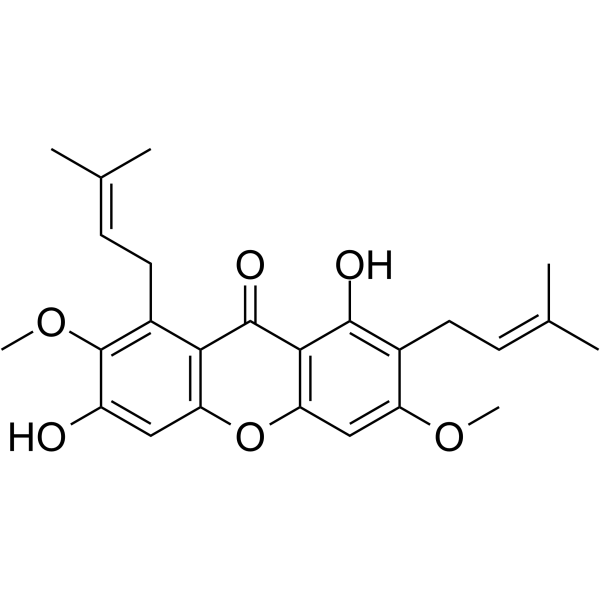
Cat. No.: HY-N0941
CAS No.: 20931-37-7
Synonyms: β-Mangostin
beta-Mangostin (β-Mangostin) is a xanthone compound present in Cratoxylum arborescens, with antibacterial and antimalarial activities. beta-Mangostin exhibits antimycobacterial activity against Mycobacterium tuberculosis with an MIC of 6.25 μg/mL. beta-Mangostin possesses in vitro antimalarial activity against Plasmodium falciparum, with an IC50 of 3.00 μg/mL. beta-Mangostin has potent anticancer activity against various cancers (such as hepatocellular carcinoma, leukaemic) .
loading...
    loading...
2
2 Cited Publications
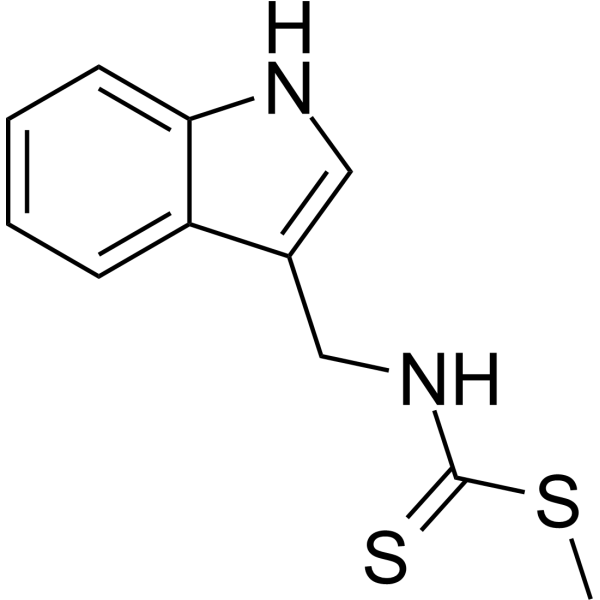
Cat. No.: HY-111334
CAS No.: 105748-59-2
Purity:  99.74%
Synonyms: Brassinine
Brassinin is the metabolism of a phytoalexin from Beassica pekinensis (Lour. ) Rupr. .
loading...
    loading...
1
1 Cited Publications
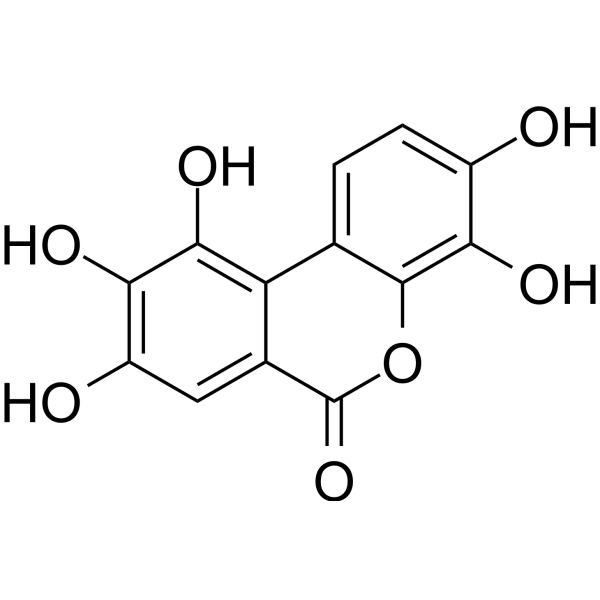
Cat. No.: HY-N7922
CAS No.: 91485-02-8
Synonyms: Decarboxyellagic acid
Urolithin M5 (Decarboxyellagic acid) is an orally active influenza virus neuraminidase inhibitor and neuroprotective agent, with IC50 values of 174.8 μM (HK68), 191.5 μM (pdm09), 243.2 μM (WSN) and 257.1 μM (PR8) against four influenza virus neuraminidases, respectively. Urolithin M5 inhibits viral neuraminidase activity, thereby blocking influenza virus replication (including oseltamivir (HY-13317)-resistant strains), protecting infected mammals from death and improving pulmonary edema. Urolithin M5 forms a hydrogen-bond stabilized complex with IGF1R, and binds to MAPK14, AKT1, NFKB1 and EGFR. Urolithin M5 reduces reactive oxygen species production, inhibits neuronal apoptosis, restores mitochondrial transmembrane potential, and promotes neurite outgrowth of damaged neuronal cells. Urolithin M5 can be used in research related to influenza virus infection and Alzheimer's disease .
loading...
    loading...
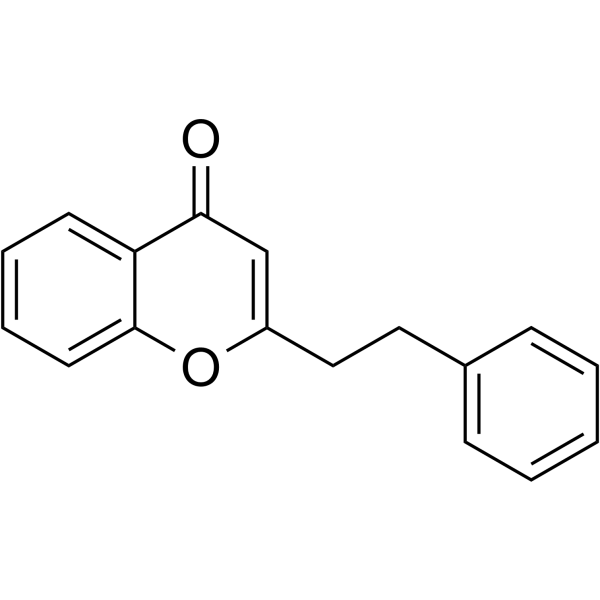
Cat. No.: HY-N8220
CAS No.: 61828-53-3
Synonyms: Flidersiachromone
2-(2-Phenylethyl) chromone (Flidersiachromone) is a chromone derivative and antioxidant. 2-(2-Phenylethyl) chromone scavenges ABTS· + free radicals, and its derivatives exhibit diverse activities including anti-inflammatory, neuroprotective, anti-tumor, and α-glucosidase inhibitory effects. 2-(2-Phenylethyl) chromone is applicable to experimental research in fields such as inflammation-related diseases, tumors, and neurodegenerative diseases .
loading...
    loading...
Cat. No.: HY-N2126
CAS No.: 952068-57-4
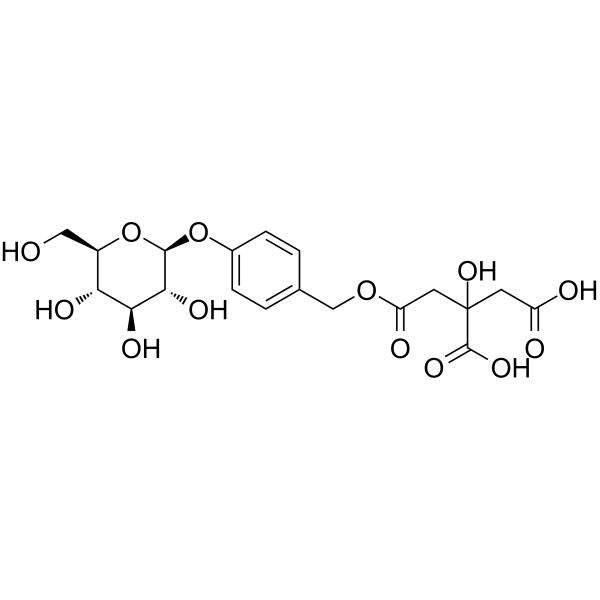
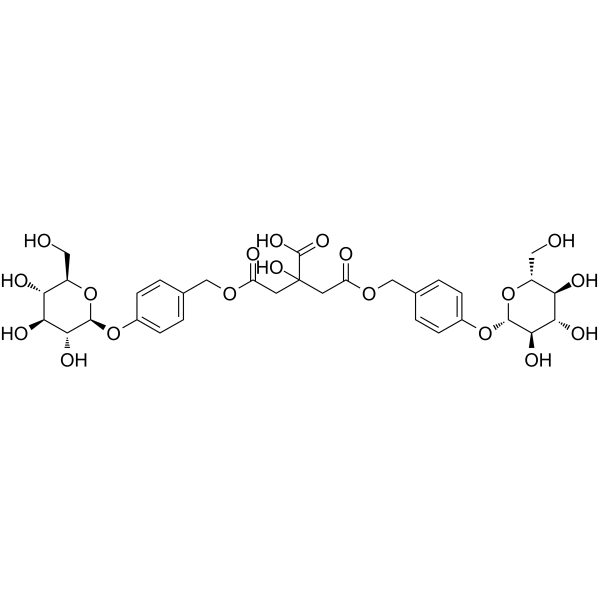
Parishin E is a modulator of hexokinase 2, lactate dehydrogenase A, and silent information regulator 6 (sirtuin 6), and is also a component present in Gastrodia elata Blume . Parishin E reduces the expression of hexokinase 2 and lactate dehydrogenase A, thereby regulating the process of cellular glycolysis . Parishin E regulates the deacetylation mediated by silent information regulator 6 (Sirtuin 6), and inhibits histone 3 lactylation modifications at the H3K18la and H3K27la sites . Parishin E inhibits macrophage polarization . Parishin E alleviates LPS-induced inflammatory responses and suppresses the expression of pro-inflammatory cytokines . Parishin E exerts ameliorating effects on rheumatoid arthritis . Parishin E can be used in studies related to rheumatoid arthritis .
loading...
    loading...
Cat. No.: HY-N2125
CAS No.: 174972-80-6
Parishin C is a brain-penetrant major bioactive component found in Gastrodia elata Blume. Parishin C is a 5-HT1A receptor agonist with an EC50 of 34 nM. Parishin C has antipsychotic and neuroprotective effects. Parishin C protects against Aβ-induced long-term potentiation damage and NMDA receptor current impairment. Parishin C reduces oxidative stress, pro-inflammatory cytokine levels, caspase activity, brain water content, and cerebral infarct volume; increases antioxidant enzyme activity and BDNF levels; improves nerve function and histopathological brain damage. Parishin C attenuates phencyclidine-induced immobility time increases, sociability deficits, and visual recognition memory impairment. Parishin C can be used for the research of ischemic stroke, Alzheimer's disease, and schizophrenia-like psychosis .
loading...
    loading...
Cat. No.: HY-N3196
CAS No.: 143120-46-1
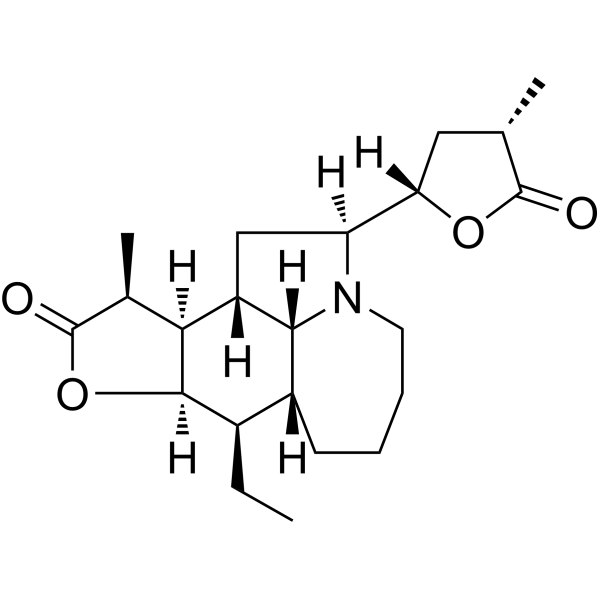
Neotuberostemonine, one of the main antitussive alkaloids in the root of Stemona tuberosa Lour, attenuates bleomycin-induced pulmonary fibrosis by suppressing the recruitment and activation of macrophages .
loading...
    loading...
Cat. No.: HY-N1474
CAS No.: 97230-47-2
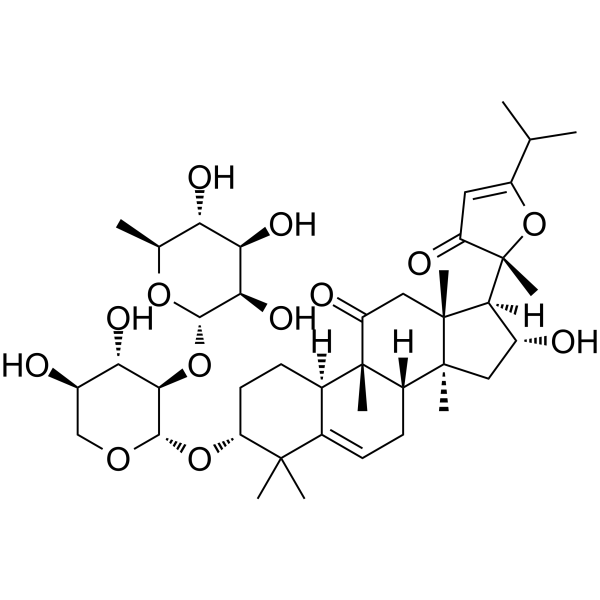
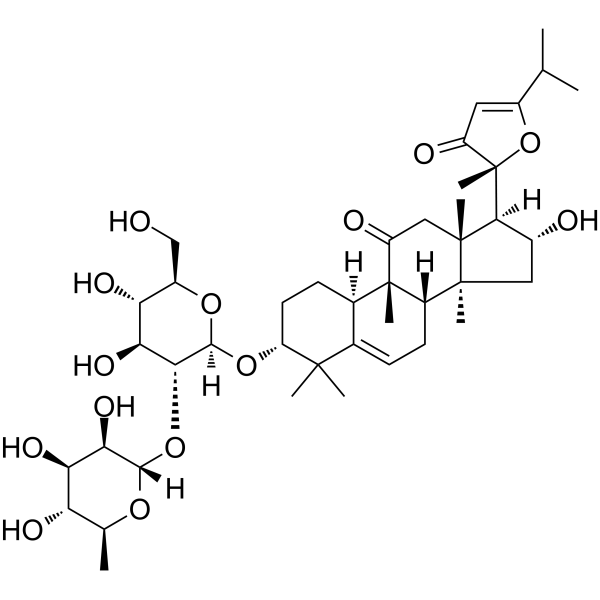
Picfeltarraenin IA, a triterpenoid obtained from Picriafel-terrae Lour (P.fel-terrae), is an acetylcholinesterase (AChE) inhibitor. Picfeltarraenin IA can be used for the treatment of herpes infections, cancer and inflammation .
loading...
    loading...
Cat. No.: HY-N4130
CAS No.: 19595-18-7
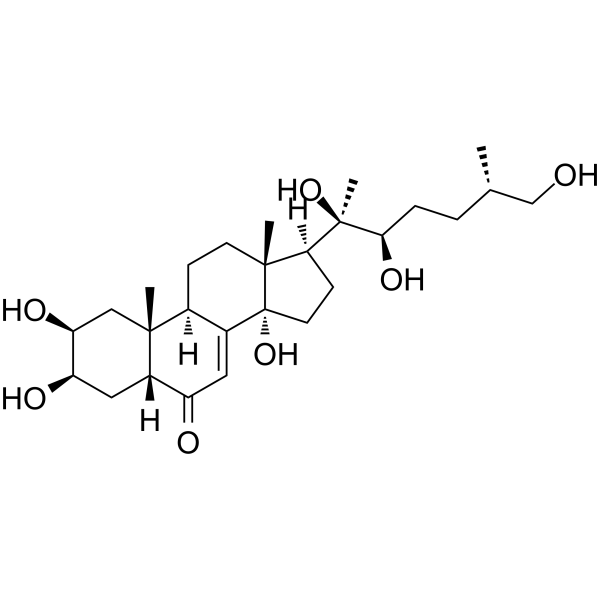
25S-Inokosterone is a phytoecdysone in the roots of two same species of A. bidentata Blume and A. japonica Nakai, and two different species of C. capitata Moq and C. officinalis Kuan. 25S-Inokosterone has the potential for the LPS-induced acute kidney injury research .
loading...
    loading...
Cat. No.: HY-N6251
CAS No.: 149155-01-1
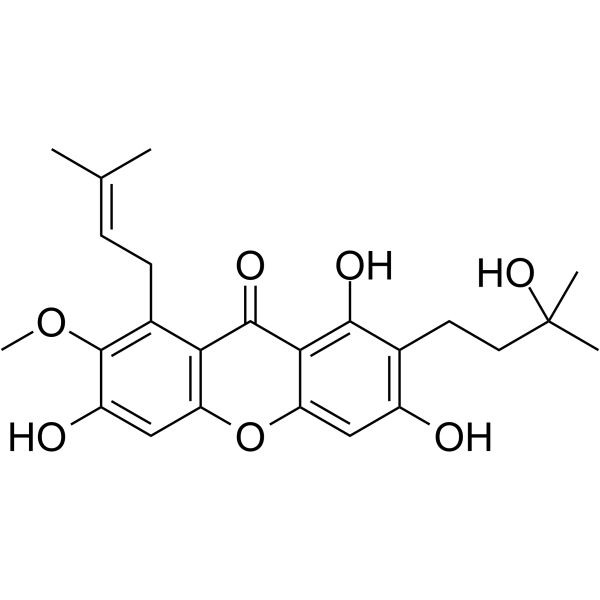
Cratoxylone, isolated from the bark of Cratoxylum Cochinchinense, possesses antiplasmodial activity .
loading...
    loading...
Cat. No.: HY-116753
CAS No.: 201529-58-0
Purity:  99.92%
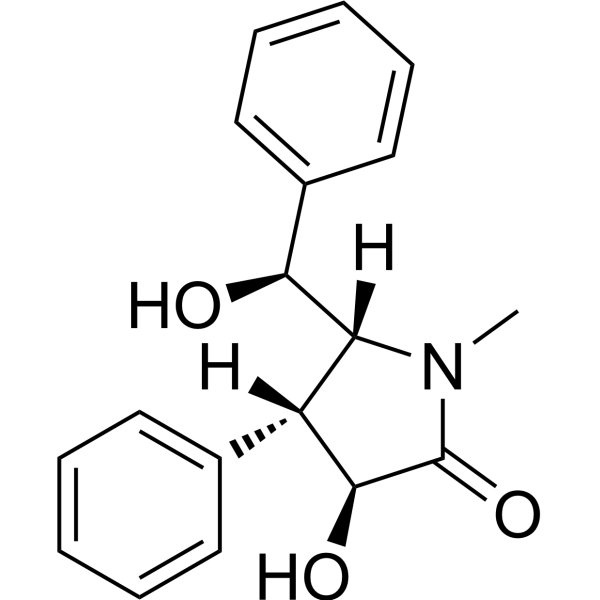
(-)Clausenamide is an active alkaloid isolated from the leaves of Clausena lansium (Lour.) Skeels, and improves cognitive function in both normal physiological and pathological conditions. (-)Clausenamide inhibits β-amyloid (Aβ) toxicity, blocking neurofibrillary tangle formation by inhibiting the phosphorylation of tau protein. (-)Clausenamide exerts a significant neuroprotective activity against Aβ25-35. (-)Clausenamide can be used for researching Alzheimer's disease (AD) .
loading...
    loading...
Cat. No.: HY-N2211
CAS No.: 97230-46-1
Picfeltarraenin IB, a triterpenoid obtained from Picriafel-terrae Lour (P.fel-terrae), is an acetylcholinesterase (AChE) inhibitor. Picfeltarraenin IB can be used for the treatment of herpes infections, cancer and inflammation .
loading...
    loading...
Cat. No.: HY-W1000105
CAS No.: 141-27-5
Synonyms: (E)-3,7-Dimethylocta-2,6-dienal
Geranial is an aromatic compound. It can be isolated from the fruits of Litsea cubeba Lour and the rhizomes of ginger (Zingiber officinale). Geranial inhibits LPS-induced phosphorylation of ERK1/2, JNK1/3 and IκB in macrophages. It suppresses the secretion of IL-1β, TNF-α and IL-6, as well as the expression of pro-IL-1β, iNOS and COX-2. Geranial increases ROS. It can be used in the research of inflammatory diseases .
loading...
    loading...
Cat. No.: HY-W106860
CAS No.: 51761-07-0
Synonyms: 3-Formylcarbazole
9H-Carbazole-3-carbaldehyde (3-Formylcarbazole) is a carbazole compound and an anticancer agent. 9H-Carbazole-3-carbaldehyde is present in the stems of Clausena lansium (Lour.) Skeels. 9H-Carbazole-3-carbaldehyde can be used in the research of cervical cancer, leukemia, non-small cell lung cancer and liver cancer .
loading...
    loading...
Cat. No.: HY-N16537
CAS No.: 18058-98-5
2-Oxostenine (Compound 7) is a stenine-type alkaloid found in the roots of Stemona tuberosa Lour. 2-Oxostenine can weakly inhibit Lipopolysaccharide (HY-D1056)-induced NO production. 2-Oxostenine can be used for the research of inflammation .
loading...
    loading...
Cat. No.: HY-117616
CAS No.: 128-76-7
Synonyms: (+)-Laurotetanine
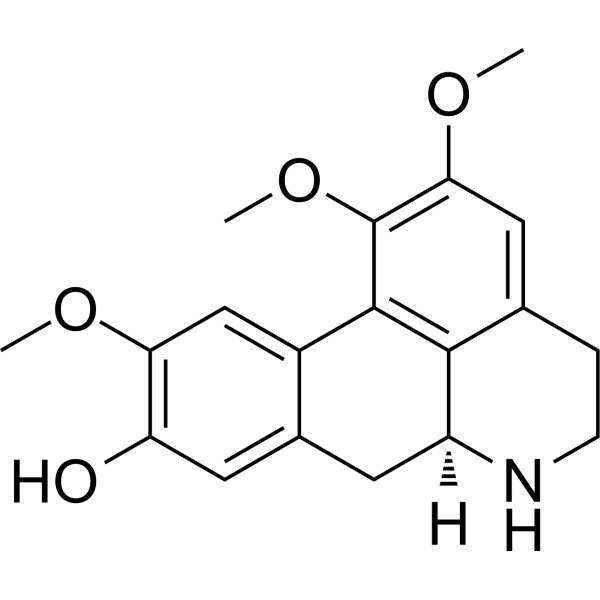
Laurotetanine ((+)-Laurotetanine) is an potent and orally active isoquinoline alkaloid and could be extracted from the roots of Litsea cubeba (Lour.) Pers. Laurotetanine exerts an anti-asthmatic effect by inhibition of IgE, histamine, and inflammatory reactions via down-regulating MUC5AC and NF-κB signaling pathways .
loading...
    loading...
Cat. No.: HY-169354
CAS No.: 143663-00-7
Lariciresinol 4-O-β-D-glucopyranoside is a natural lignan glucoside found in the leaves and stems of Symplocos cochinchinensis (Lour.) S. Moore .
loading...
    loading...
Cat. No.: HY-159104
CAS No.: 8015-91-6
Synonyms: Cinnamomum Cassia oil
Cinnamon bark oil, from Cinnamonum zeylanicum Blume is a antifungal agent against fungi causing respiratory tract mycoses .
loading...
    loading...
Cat. No.: HY-N3279
CAS No.: 80151-89-9
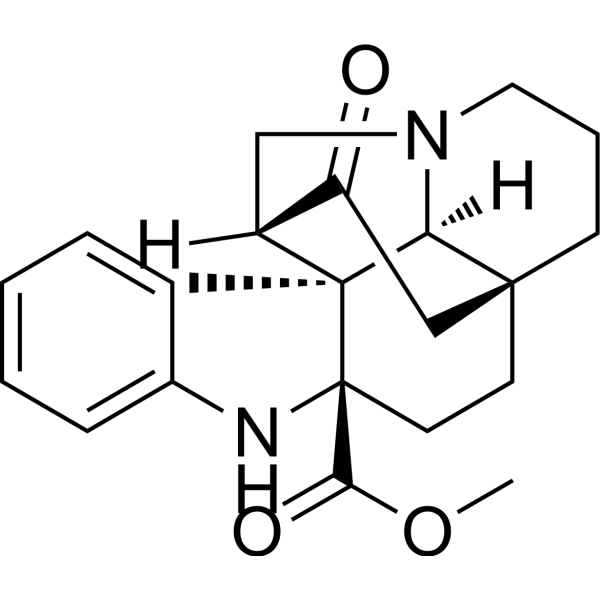
Methyl N1-demethoxycarbonylchanofruticosinate is an alkaloid isolated from the leaves of Kopsia flavida Blume of the Apocynaceae family .
loading...
    loading...
Cat. No.: HY-N8665
CAS No.: 87339-76-2
1,7-Dihydroxy-4-methoxyxanthone is a Xanthones product that can be isolated from the woods of Cratoxylum maingayi. .
loading...
    loading...

